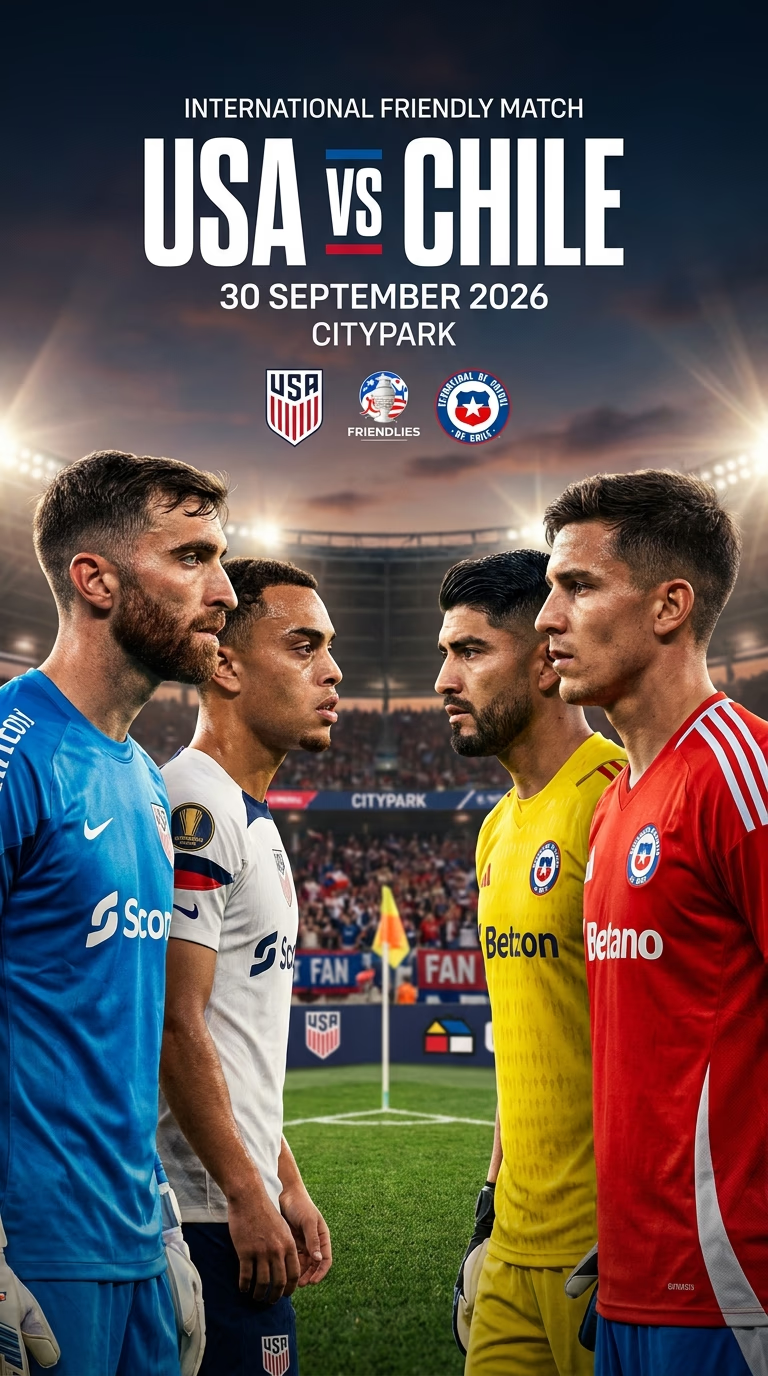



USA vs Chile Preview: Pochettino and Gareca Get a Clean Test at CITYPARK
No score yet, no team sheets yet, no cover story. Score data is unavailable because the match has not been played. That is the point of this one.
USA meet Chile on Wednesday, September 30, 2026, at CITYPARK in a Friendly International that matters not for a table, but for the next cycle. For M. Pochettino, this is about control after a World Cup that brought progress, goals, and then a sharp reminder against Belgium. For R. Gareca, it is about restoring edge to a Chile side still searching for a new identity after years of transition.
Understand the brief: this is not a glamour friendly for the cameras. It is a squad audit.
The match frame
- Competition: Friendlies
- Round: Friendly International
- Date: September 30, 2026
- Venue: CITYPARK
- Match status: pre-match
- Score data: unavailable
USA arrive with a recent run that tells a mixed story. They beat Paraguay 4-1, beat Australia 2-0, lost 3-2 to Turkey, beat Bosnia & Herzegovina 2-0, then lost 4-1 to Belgium in the World Cup Round of 16. That is not collapse. It is a ceiling check.
Chile’s form is just as revealing. They beat Peru 2-1, beat Cape Verde 4-2, lost 4-1 to New Zealand, lost 2-1 to Portugal, then beat DR Congo 2-1. Results with goals in them, both for and against. That makes Gareca’s job clear: tighten the team without killing its instinct.
For the wider international window, Australia vs Brazil in Brisbane offers another useful comparison: friendlies now are less about ceremony and more about squad documents, tactical clauses, and who gets the green light for the next competitive block.
Coaches and formations
M. Pochettino is the head coach of USA.
R. Gareca is the head coach of Chile.
Confirmed formations have not been released in the match data. USA’s starting XI is not available. Chile’s starting XI is not available. Any declared 4-3-3, 4-2-3-1, or back-three structure before the official team sheets would be guesswork.
That matters because this match could change completely depending on the first line of pressure. If USA press high, the game becomes a test of Chile’s build-up nerve. If Chile sit in a mid-block and wait, Pochettino’s team will need patience, width, and sharper timing between the lines. With no confirmed lineups, the safest tactical read is structural rather than individual.
Why it matters for USA
Pochettino’s USA need to turn promise into rhythm.
The World Cup run gave them good evidence: they could score, they could handle pressure in spells, and they could beat teams they were expected to beat. But the 4-1 defeat to Belgium was the kind of match that shows where the elite line sits. It usually comes down to details: how clean the first pass is, how quickly midfield reacts after losing the ball, and how calm the back line stays when the opponent breaks the first press.
This friendly gives Pochettino a controlled environment to test that.
The big question is not only whether USA dominate possession. It is what they do after possession breaks. Pochettino teams are built on intensity, but intensity without spacing becomes chaos. Against a Chile side that can punish loose rest defense, the home team’s counter-press will be watched closely.
The key areas for USA:
- First pass under Chile pressure
- Full-back positioning when attacks develop
- Midfield protection behind the ball
- Tempo after regains
- Chance creation against a compact block
No starting players can be confirmed from the match data, but the roles are obvious. USA need a midfield controller, a runner beyond the defensive line, and wide players who can stretch Chile rather than drift inside too early.
Why it matters for Chile
Gareca’s task is more delicate.
Chile are not just preparing for one night at CITYPARK. They are still managing the longer handover from one era to another. Recent results show the problem: wins against Peru, Cape Verde, and DR Congo, but heavy damage in the 4-1 defeat to New Zealand and a narrow loss to Portugal. That is a team capable of playing, but not yet stable enough without the ball.
Against USA, Chile’s best route may be to make the match uncomfortable. Slow the rhythm, break the press with quick passing when possible, and attack the spaces left by American full-backs. Gareca will know that Pochettino sides want tempo. The proposal from Chile should be different: deny the game its clean pattern.
The danger is sitting too deep for too long. If Chile allow USA to camp in their half, the match becomes a question of resistance. If they press without coordination, the game opens. Gareca needs balance, and that is the hardest commodity to buy in international football.
For related international context, Russia vs Iran in Kazan is another fixture where structure may matter more than star names.
Tactical picture
This is likely to be decided by spacing more than spectacle.
USA will want territory. Pochettino will want the ball recovered quickly, the distances short, and the next pass forward. The danger is becoming too vertical too soon. If every regain turns into a rushed attack, Chile will welcome the broken game.
Chile, under Gareca, should be judged on discipline between the lines. The first defensive line must decide whether to press the USA centre-backs or protect midfield. The second line then has to stay connected. If that gap opens, USA will find receiving zones in dangerous areas.
The most important tactical duel may be this: USA’s rest defense against Chile’s transition.
Friendlies often lose shape after substitutions, but the first hour should tell Pochettino and Gareca plenty. Which team controls second balls? Which team keeps its full-backs protected? Which team plays out when pressed rather than clearing its lines? That is where staff will take their notes.
Recent form
USA
- July 7, 2026: lost 4-1 to Belgium
- July 2, 2026: won 2-0 against Bosnia & Herzegovina
- June 26, 2026: lost 3-2 to Turkey
- June 19, 2026: won 2-0 against Australia
- June 13, 2026: won 4-1 against Paraguay
Chile
- June 9, 2026: won 2-1 against DR Congo
- June 6, 2026: lost 2-1 to Portugal
- March 30, 2026: lost 4-1 to New Zealand
- March 27, 2026: won 4-2 against Cape Verde
- November 18, 2025: won 2-1 against Peru
The read
USA should treat this as a control test. Chile should treat it as a resistance test.
Pochettino needs clarity before the next squad phase: who fits the press, who protects the middle, and who can play at international speed. Gareca needs proof that Chile can compete away from home without the match becoming stretched and emotional.
The team sheets will decide the exact shape. But the timeline is clear: Wednesday at CITYPARK gives both managers a useful checkpoint, and for two sides trying to define what comes next, that may be more valuable than the scoreline.