

Russia 3-3 Nigeria: Siasia’s bench flips the script in Nizhny Novgorod
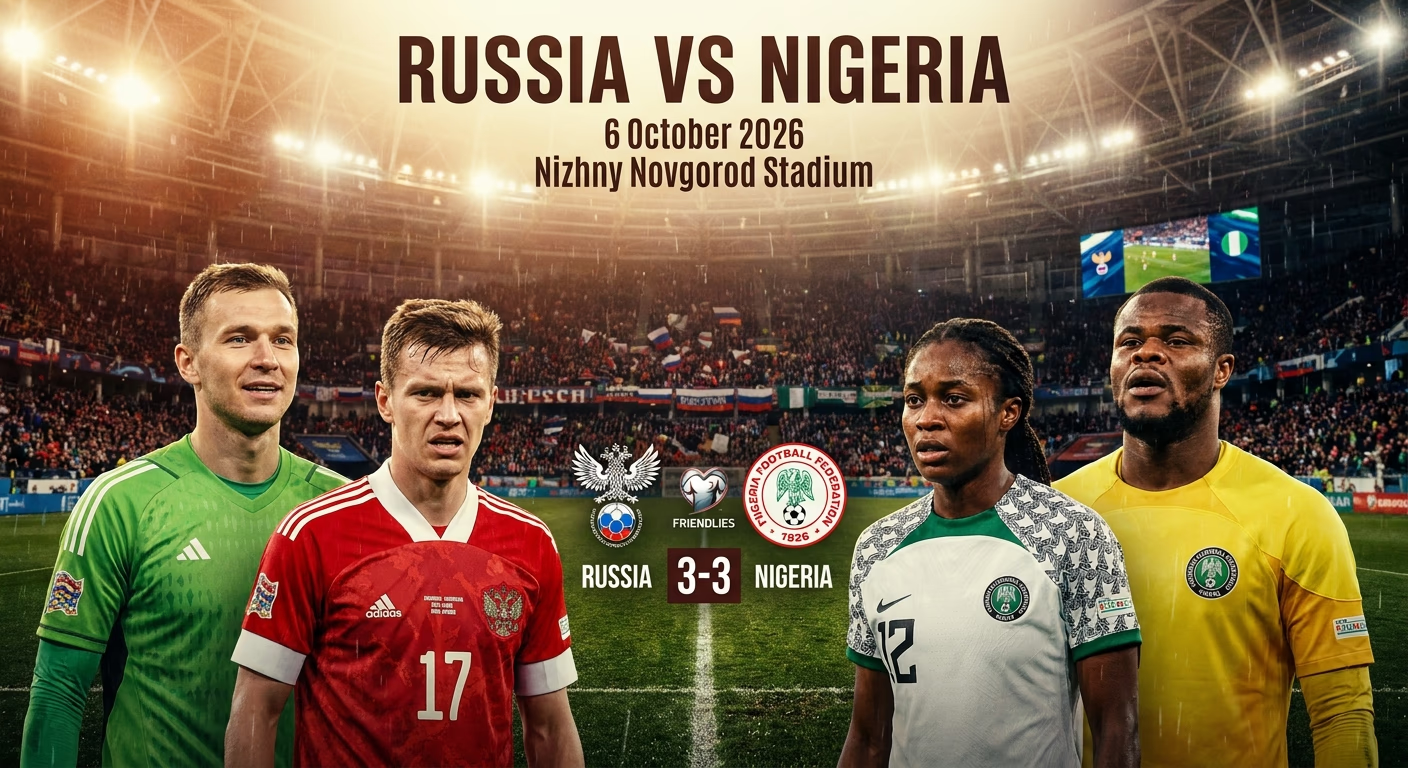
Russia had the ball, the territory, the control, and a two-goal lead. Nigeria had the better ending. That was the story at Nizhny Novgorod Stadium on October 6: a friendly that Russia shaped for long spells, only for S. Siasia’s substitutes to turn it into a 3-3 draw that felt like a warning as much as a rescue act.
Kelechi Iheanacho put Nigeria ahead in the 10th minute, assisted by Abdullahi Bewene. Russia responded through Lechi Sadulaev in the 30th minute, assisted by Matvey Kislyak, before Kislyak scored himself in the 45th minute. Aleksey Miranchuk made it 3-1 in the 54th minute from Aleksandr Sobolev’s assist.
At that point, Russia looked in control: a lead in place, momentum secured, the match almost managed. Almost.
Then came the Nigerian bench. Peter Edokpolor, introduced in the 70th minute, scored in the 78th minute. Akor Adams, sent on at the break, scored in the 90th minute, assisted by Umar Abubakar, another 70th-minute substitute. That was the story: Russia’s starters built the lead, Nigeria’s changes broke it.
Match summary
Russia, coached by Valeri Karpin, had no formal formation listed in the lineup feed, but their XI was built with Aleksandr Maksimenko in goal, a back line of Ilya Vakhaniya, Viktor Melekhin, Maksim Osipenko and Danil Krugovoy, Ivan Oblyakov, Matvey Kislyak and Aleksey Batrakov in midfield, and Aleksey Miranchuk, Aleksandr Sobolev and Lechi Sadulaev ahead of them.
Nigeria, under S. Siasia, lined up in a 4-3-1-2: Samuel Friday James in goal, Abdullahi Bewene, Benjamin Fredrick, Emmanuel Fernandez and Isaac James across the back, Stephen Michael, Aderemi Adeoye and Wilfred George Igor in midfield, Chibuzo Nwoko behind Kelechi Iheanacho and Moses Simon.
Nigeria struck first in the 10th minute, when Iheanacho scored from Bewene’s assist. It was a clean early reminder that possession would not be the same as safety for Russia.
Russia’s response was steady rather than frantic. Sadulaev scored in the 30th minute after Kislyak’s assist, and Kislyak then put Russia 2-1 up in the 45th minute. The Russian midfielder was the game’s most complete home player: one goal, one assist, 72 passes, 66 accurate passes, two tackles and two interceptions. He gave Karpin’s side rhythm and end product.
There was friction before the interval too. Ivan Oblyakov was booked in the 37th minute for argument, and Sadulaev followed with a yellow card in the 43rd minute for a foul. Russia led, but they were not entirely calm.
Miranchuk’s goal in the 54th minute, assisted by Sobolev, should have ended the contest. Instead, it became the point from which Russia began to lose their grip.
The substitutions changed everything
Siasia moved early. Akor Adams came on for Stephen Michael in the 46th minute, and Abdullahi Umar replaced Iheanacho in the 46th minute. That was bold: Nigeria removed their opening scorer at half-time, but the decision eventually paid off.
Karpin made a triple change in the 60th minute: Maksim Glushenkov for Miranchuk, Konstantin Tyukavin for Sobolev, and Kirill Glebov for Sadulaev. All three departing players had been directly involved in Russia’s goals. The logic was clear in a friendly: manage minutes, inspect options, spread the load. The consequence was just as clear: Russia lost some of the sharpness that had put them 3-1 ahead.
Siasia’s next move was decisive. Umar Abubakar replaced Moses Simon in the 70th minute, and Edokpolor came on for Aderemi Adeoye in the 70th minute. Eight minutes later, Edokpolor scored in the 78th minute. Then Abubakar supplied Adams for the equaliser in the 90th minute.
That was not just a comeback. It was a bench delivering exactly what a coach asks for in a friendly: impact, clarity and proof.
Russia tried to settle late, sending Mingiyan Beveev on for Melekhin in the 79th minute and Danyl Prutsev on for Oblyakov in the 88th minute. Nigeria also added Vince Osuji for Nwoko in the 83rd minute, shortly after Nwoko had been booked in the 81st minute. Abdullahi Umar was shown a yellow card in the 90+6th minute.
Tactical read
Russia’s control was real. They had 63% possession, 541 passes and an 87% passing accuracy. Osipenko completed a heavy volume from the back, while Kislyak and Oblyakov helped keep the ball moving through midfield. Russia also produced 16 shots, 10 from inside the box, and forced Samuel Friday James into three saves.
But control without closure is dangerous. Once Miranchuk, Sobolev and Sadulaev went off in the 60th minute, Russia’s attacking reference points changed. The earlier connections were gone: Sobolev had assisted Miranchuk, Kislyak had assisted Sadulaev, and Sadulaev had given Russia a direct route back into the game after Nigeria’s opener.
Nigeria’s 4-3-1-2 was stretched for long periods, but it had two useful qualities: runners to break out, and forwards who could punish limited chances. Nigeria had only 37% possession and 324 passes, yet finished with six shots on goal, the same number as Russia. That matters. Siasia’s side did less with the ball, but they did enough where it counted.
Bewene was important early, assisting Iheanacho in the 10th minute and finishing with strong defensive numbers: two tackles, three interceptions, and nine duels won from 12. Fredrick was even more forceful defensively, winning 11 of 12 duels and making six tackles. Without that resistance, Nigeria would not have stayed close enough for the late comeback to matter.
The late front line changed the rhythm. Edokpolor needed little time to matter. Adams gave Nigeria a finishing presence after the break. Abubakar, introduced in the 70th minute, supplied the equaliser in the 90th minute and also registered two shots on goal. That is the kind of substitute package coaches remember.
Key statistics
| Category | Russia | Nigeria |
|---|---|---|
| Final score | 3 | 3 |
| Possession | 63% | 37% |
| Total shots | 16 | 10 |
| Shots on goal | 6 | 6 |
| Shots inside box | 10 | 6 |
| Corner kicks | 7 | 3 |
| Fouls | 17 | 10 |
| Yellow cards | 2 | 2 |
| Goalkeeper saves | 3 | 3 |
| Total passes | 541 | 324 |
| Pass accuracy | 87% | 78% |
Goals
- 10th minute: Kelechi Iheanacho, Nigeria, assisted by Abdullahi Bewene
- 30th minute: Lechi Sadulaev, Russia, assisted by Matvey Kislyak
- 45th minute: Matvey Kislyak, Russia
- 54th minute: Aleksey Miranchuk, Russia, assisted by Aleksandr Sobolev
- 78th minute: Peter Edokpolor, Nigeria
- 90th minute: Akor Adams, Nigeria, assisted by Umar Abubakar
Cards and substitutions
Ivan Oblyakov was booked in the 37th minute, Sadulaev in the 43rd minute, Chibuzo Nwoko in the 81st minute, and Abdullahi Umar in the 90+6th minute.
Nigeria made the bigger calls and got the bigger return. Adams came on for Stephen Michael in the 46th minute, Umar replaced Iheanacho in the 46th minute, Abubakar replaced Moses Simon in the 70th minute, Edokpolor replaced Aderemi Adeoye in the 70th minute, and Osuji replaced Nwoko in the 83rd minute.
Russia’s changes came in waves: Glushenkov, Tyukavin and Glebov entered in the 60th minute for Miranchuk, Sobolev and Sadulaev. Beveev replaced Melekhin in the 79th minute, and Prutsev replaced Oblyakov in the 88th minute.
What it means
For Russia, this was a friendly with a hard lesson attached. Karpin’s side produced enough football to win it, but the drop after the 60th-minute changes was obvious. Kislyak emerged with credit, Sadulaev and Miranchuk took their goals, Sobolev contributed an assist, but conceding in the 78th minute and again in the 90th minute will sting.
For Nigeria, this was the sort of draw that feels useful. Siasia learned that his starters can strike early, that Bewene and Fredrick can hold up under pressure, and that his bench has bite. Edokpolor and Adams changed the game because they gave Nigeria fresh finishing actions when Russia thought the contest had moved beyond them.
No trophy, no table, no qualification points. Still, friendlies are where coaches collect evidence. Nigeria left Nizhny Novgorod with a comeback and a deeper attacking file. Russia left with three goals, plenty of possession, and one problem to fix before the next window: how to finish the job once the first plan has worked.