

Japan vs Venezuela Preview: Hiroshima Gets a Serious Friendly Test
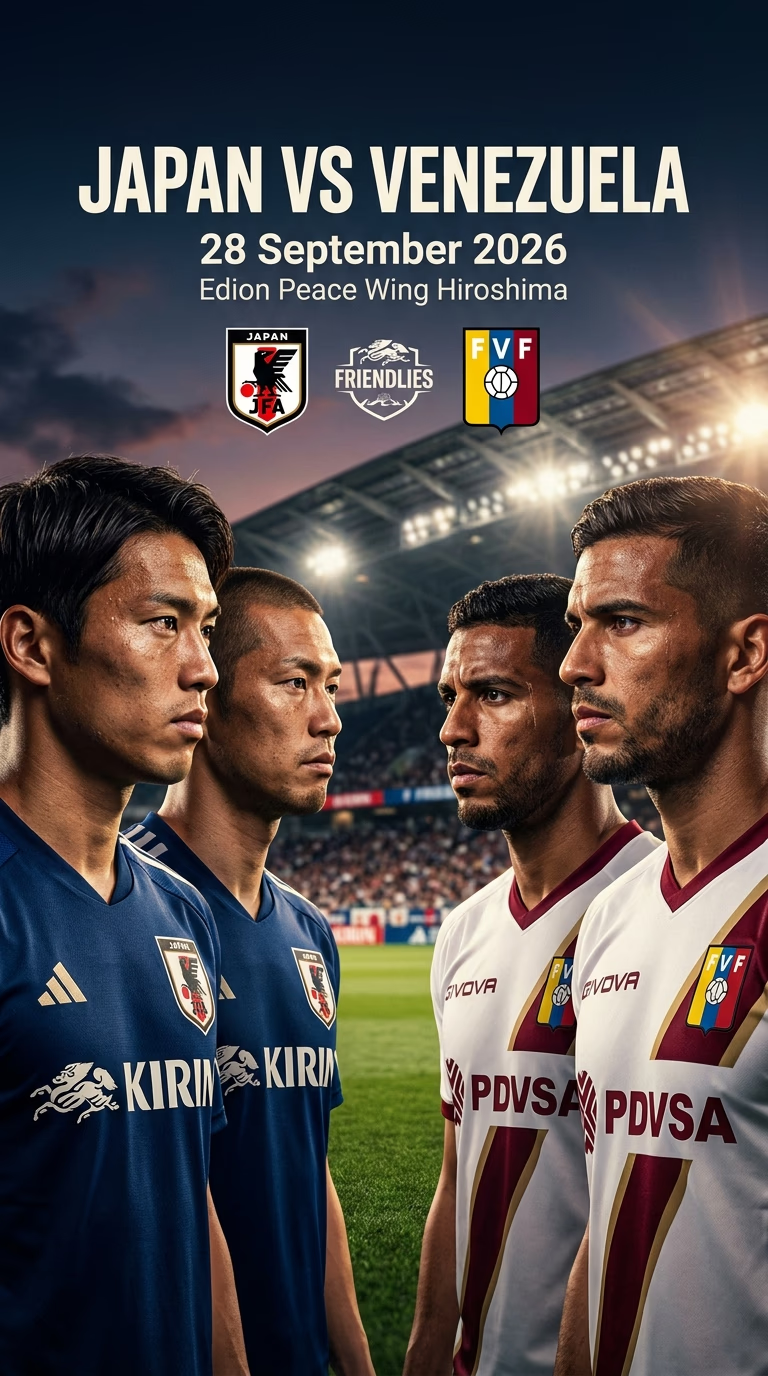
Japan host Venezuela on September 28, 2026, at Edion Peace Wing Hiroshima, with no score data available yet, no official match events, and no confirmed lineups from the match feed. What is clear is that this is a useful friendly test for H. Moriyasu and a sharp away examination for F. Batista.
Because the match feed is still in pre-match mode, form runs, recent results, head-to-head records, and starting XIs should be treated carefully unless they are confirmed by official data. The strongest verified information at this stage is the fixture detail, venue, competition, squads, and the current head coaches listed for each team.
The venue matters too. Hiroshima gives Japan home rhythm, familiar conditions, and a crowd expecting tempo. Venezuela will know that if they allow Japan to settle into their passing lanes early, the match can become long very quickly.
Match Details
- Fixture: Japan vs Venezuela
- Competition: Friendlies, 2026
- Round: Friendly International
- Date: September 28, 2026
- Venue: Edion Peace Wing Hiroshima
- City: Hiroshima, Japan
- Score data: Unavailable pre-match
The Shape of the Game
Official lineups are not yet available in the match data, so any predicted XI should be treated as provisional. Japan’s current squad does, however, give Moriyasu the pieces for a back-three system such as a 3-4-2-1, with defenders including Ayumu Seko, Ko Itakura, Shogo Taniguchi, Hiroki Ito, and Takehiro Tomiyasu available in the squad list.
In midfield and attack, Japan have enough flexibility to control the ball and rotate between the lines. Kaishu Sano, Ao Tanaka, and Daichi Kamada offer central options, while Junya Ito, Ritsu Doan, Takefusa Kubo, Keito Nakamura, and Ayase Ueda give Moriyasu several ways to build the front line.
For Venezuela, Batista has squad options that can support a compact defensive shape and quick transition game. Yangel Herrera is an important midfield reference, while Nahuel Ferraresi, Jhon Aramburu, Christian Makoun, Carlos Vivas, and Teo Quintero are among the defensive options listed in the current squad.
That points to a clear tactical bargain. Japan will want the ball. Venezuela will want the best spaces after winning it.
Where Japan Can Win It
If Japan use a 3-4-2-1, the route into the half-spaces becomes central. Players such as Doan, Kubo, Kamada, and Nakamura can receive between the lines, make Venezuela’s midfielders hesitate, and create lanes for runners outside them.
Ueda matters because he gives Japan a central reference. If he pins the centre-backs, Japan’s attacking midfielders get more room. If Venezuela’s defenders step out, Japan can look to receive in dangerous pockets behind them.
Sano and Tanaka are also important to the tempo. Japan do not need this to become frantic. They need clean circulation, quick switches, and pressure immediately after losing the ball. Against a side likely to look for transitions, rest defence is not a detail. It is the match.
Venezuela’s Route
Venezuela’s best route is direct but not crude. Salomón Rondón can occupy defenders and give Batista’s side a target, while attackers such as Jovanny Bolívar, Gleiker Mendoza, David Martínez, Cristian Ramírez, Kevin Kelsy, and Alejandro Marqués offer different ways to threaten space.
That is why Herrera’s role could be decisive. If he plays in the double pivot, he has to slow Japan’s combinations before they reach the attacking midfielders, then release the first forward pass with speed. Venezuela cannot spend the whole match defending their box. They need spells where Japan are made to run backwards.
A 4-2-3-1 would also create a simple defensive question: can Venezuela’s wide players track Japan’s width without losing their own counter threat? If they drop too deep, Rondón becomes isolated. If they stay high, Japan can overload the flanks.
Form and Head-to-Head
The supplied match feed for this preview does not include verified form data, standings, recent results, or head-to-head records. For that reason, the safest reading is tactical rather than statistical: Japan have the home platform and squad depth to control possession, while Venezuela have enough physical presence and transition threat to make the match uncomfortable.
This is a friendly, but not an exhibition. Both coaches have useful questions to answer before the next competitive cycle.
Japan’s broader international window also sits alongside other friendlies on the calendar, including Australia vs Brazil, India vs Panama, and the upcoming Bolivia vs Paraguay.
Verdict
Japan should control longer phases if Moriyasu sets them up with a possession-heavy structure. The quality between the lines, the home setting, and the range of attacking options give Japan the stronger platform.
But Venezuela have enough strength and experience to make this uncomfortable. If Rondón provides a focal point and Batista’s midfielders can release runners quickly, Venezuela can turn a controlled Japan performance into a more open match.
For Japan, this is about rhythm, structure, and depth. For Venezuela, it is about showing that their transition game travels. The result will matter less than the evidence, but both coaches will want a clean, convincing answer.